Tuesday, May 15, 2007

Senate Bills 1272 and 1277

Both of these bills have been reported favorably out of Committee. Bill 1452 was withdrawn in order to make the wording more favorable to biodiesel production in North Carolina.

Developing

Monday, May 14, 2007

Producer Speaks

by Sam Gray
Director of Operations
Smoky Mountain Biofuels


To say the condition of North Carolina's biodiesel producers is "critical" would be an understatement. There are four main producers of biodiesel in our state: Smoky Mountain Biofuels, Foothills Bio-Energies, Piedmont Biofuels, and Blue Ridge Biofuels. We can be labelled as small producers, capable of producing in excess of one million gallons a year per location, with extra capacity available from each producer as market conditions allow. However, with the strength of South Carolina's already passed legislation concerning biodiesel, many of our state's "producers" are encouraged to act more like "distributors" by buying their product out of South Carolina. It is no coincidence that Carolina Polymer out of Taylors, South Carolina, profits with our state's dollars as they leave North Carolina to purchase their fuel. This type of atmosphere, while it may increase public access to biodiesel, does nothing to promote the manufacturing jobs associated with biodiesel factories. This atmosphere will do nothing to push our state closer to its "Strategic Plan for Biofuels Leadership," which envisions OUR STATE meeting OUR CREATED DEMAND.

Sustainable energy is not a commodity that North Carolina should allow to be outsourced to South Carolina, or even Iowa, Nebraska, and Illinois. We have the feedstock for renewable fuels by virtue of incredible amounts of soy oil (Fayetteville), high grade chicken fat, waste vegetable oil, and experimental sources such as sunflower oil throughout the state. We have businesses in place to handle the anticipated demand called on by our "Strategic Plan."

We have petroleum distributors willing to purchase our renewable fuels such as biodiesel, and we have legislators that must understand by now the leadership role that sustainable energy production portrays to their constituents.

The biodiesel legislation sponsored by Senator Snow, most notably Senate Bill 1451, along with recently introduced legislation (House Bill 2003) sponsored by Rep. Pricey Harrison to refund the state's excise tax per gallon to biodiesel producers monthly (simply a zero interest government loan, since we first pay the tax before it is returned weeks later), is responsible legislation that needs action NOW. The Biodiesel Incentive Fund provides production based incentives to North Carolina Biodiesel Producers linked to yearly production. The incentive is received yearly, and while it does not alleviate cash flow concerns of producers waiting for a "refund," it does solidify the vanishing margins seen across the board by biodiesel producers. Rep. Harrison's legislation (the biodiesel portion) allows a producer to make payment on their state excise taxes to the NC Department of Revenue, and then receive the equal refund weeks later.

The cash flow implications are enormous, and allow the increased cash flow to be available immediately for feedstock purchases or equipment upgrades. Both Sen. Snow and House Rep. Harrison have an eye toward the future, as this landmark legislation would launch our state to the forefront of the "Sustainable Energy" movement on the east coast. This legislation would discourage North Carolina dollars migrating southbound to purchase a biodiesel product that is currently cheaper thanks to legislation passed years ago. This legislation encourages smaller biodiesel production facilities throughout the state, which in turn creates more local jobs than the giant biodiesel facilities throughout the Midwest.

When considering such progressive legislation, one must consider the resulting effect on our state's revenue stream before the proposed legislation sunsets. In a time of squeezed budgets and increasing state costs, many legislators might overlook the significance of aiding our existing biodiesel producers. However, I stress that this oversight is akin to negligence, and is incredibly short sighted in nature.

Besides the jobs our industry offers in economically depressed areas, and besides the incredible gains seen by farmers by creating a consistent cash crop, we are reducing our state's dependence on foreign oil sources. We are also improving our air quality, which attracts the out of state people to our area and aids economic growth. They either purchase a primary residence here (for our state's biological diversity and beauty), or they purchase a second home to retire later in life. Either way, the tax base is grown because newcomers see North Carolina as an environmental steward in the south, capable of spurring small business while keeping an eye to the future. The coming years must have sustainable fuels along with conservation oriented measures just to keep our promise to future generations that they, too, can visit the Great Smoky Mountains National Park and have views BETTER than those that exist now, with these smog laden views a shameful reminder of the short sighted nature of industry. Our company's factory resides by these great mountains, and we, through our distributor Mountain Energy, are doing everything in our power to better our region by distributing our locally produced biodiesel.

I challenge this current grouping of NC House Representatives and Senators to promptly review, and enact passage of Rep. Harrison's and Sen. Snow's pieces of legislation. A failure to do so, while seemingly unimportant in the face of teacher pay raises, medical care improvements, etc., would submit to the residents of our great state that sustainable energy is simply ahead of its time, and unable to deliver the gains that we promise are possible. Neither this, nor is the outsourcing of sustainable energy jobs to South Carolina, Iowa, Nebraska, etc. is acceptable. The biodiesel producers in this state are ready to accept the challenge posed by our NC Strategic Plan. We are simply asking for some help and leadership along the way, and are hoping to see such vision this year.

No Time for the Laurels


Tomorrow at 10am, the Senate Committee on Commerce, Small Business, and Entrepreneurship will be hearing Senate Bills, 1272, 1277, and 1452. It is important that we contact the members of this committee and urge them to support these bills. I understand with the lack of notice, that individuals who prefer snail mail will be left out of the loop, but that shouldn’t stop the rest of us from contacting the Senate.

Chairman: R.C. Soles
Vice Chairman: David Hoyle
Vice Chairman: Tony Rand
Members: Tom Apodaca, Doug Berger, Phil Berger, Harris Blake, Julia Boseman, Walter Dalton, , Katie Dorsett, Tony Foriest, James Forrester, Linda Garrou, Eddie Goodall, Steve Goss, Malcolm Graham, Kay Hagan, Neal Hunt. Jim Jacumin, John Kerr, Vernon Malone, Floyd McKissick, Martin Nesbitt, Robert Pittenger, William Purcell, Larry Shaw, Richard Stevens

SUBJECT: Support SB 1272, 1277, 1452


Dear Sen. **Insert Senators Name**,

I am writing you to support Senate Bills, 1272, 1277, 1452. All of these bills directly respond to the biofuels industry of North Carolina. They have been referred to the Committee on Commerce, Small Business, and Entrepreneurship, of which, you are a member. They are slated for a hearing tomorrow at 10am. These are important bills and will directly affect North Carolina’s future as a leader in the biofuels industry. Vote Yes, on S 1272, 1277, and 1451.

Sincerely,


**Name**
**Address**

Thursday, May 10, 2007

Bill Status


Senate Bill 1272 Actions (2007-2008 Session)
Bill Lookup
Actions taken on Senate Bill 1272 in the 2007-2008 Session of the North Carolina General Assembly
Thu, 10 May 2007 11:01:12 -0400


Senate Chamber: Ref To Com On Commerce, Small Business and Entrepreneurship
1272.1
See link for details.
Mon, 26 Mar 2007 00:00:00 -0400


Senate Bill 1273 Actions (2007-2008 Session)
Bill Lookup
Actions taken on Senate Bill 1273 in the 2007-2008 Session of the North Carolina General Assembly
Thu, 10 May 2007 11:45:41 -0400


Senate Chamber: Ref To Com On Finance
1273.1
See link for details.
Mon, 26 Mar 2007 00:00:00 -0400


Senate Bill 1277 Actions (2007-2008 Session)
Bill Lookup
Actions taken on Senate Bill 1277 in the 2007-2008 Session of the North Carolina General Assembly
Thu, 10 May 2007 12:14:14 -0400


Senate Chamber: Ref To Com On Commerce, Small Business and Entrepreneurship
1277.1
See link for details.
Mon, 26 Mar 2007 00:00:00 -0400

Senate Bill 1451 Actions (2007-2008 Session)
Bill Lookup
Actions taken on Senate Bill 1451 in the 2007-2008 Session of the North Carolina General Assembly
Thu, 10 May 2007 14:00:46 -0400

Senate Chamber: Ref to Commerce, Small Business and Entrepreneurship. If fav, re-ref to Appropriations/Base Budget
1451.1
See link for details.
Mon, 26 Mar 2007 00:00:00 -0400


Wednesday, May 9, 2007

Contact Your Legislators

Senate Bill 1272: Definition of Biodiesel

Motor Fuel History in North Carolina
In North Carolina’s history it has never produced or refined any type of fuel to be used in automobiles. In fact North Carolina has to import 100% of all of its motor fuels from either other states or countries. Last year nearly 6 billion gallons of petroleum were imported into North Carolina. As alternative fuels, such as biodiesel and ethanol gain ground in the motor fuels supply new policy questions emerge for North Carolina legislators. The single largest challenge that biofuels present to North Carolina policy makers is how to regulate the industry in a way that both promotes the industry and at the same time protects the consumer who chooses to use these new fuels.

Making Biofuels
When Rudolph Diesel, the inventor of the Diesel engine, first built his engine he ran it off of biodiesel made from peanut oil. The science behind biofuels, such as biodiesel, has been around for over a century. The scientific and financial formula for biodiesel calls for a number of people and industries to be involved in the process. Biofuels, unlike standard petroleum fuels, bring together an incredible number of people across industries and backgrounds, these include: farmers, commodity traders, agriculture processors, biofuel producers, distributors, retailers, and consumers. Each person in this line of development plays an important role in the development or distribution of the fuel to the final consumer. Biofuels can do a lot to reinvigorate North Carolina’s rural communities.

The Need For a Biodiesel Definition
As North Carolina enters a period of history where it can make its own motor fuels it is important that North Carolina policy makers take the time to define the different biofuels that are being made. Senate Bill 1272 defines biodiesel. Currently the definition of Biodiesel is found in Section 105-449.60 of the General Statutes. Per that section:

Biodiesel. Any fuel or mixture of fuels derived in whole or in part from agricultural products or animal fats or wastes from these products or fats.

While this does describe biodiesel in a very general form it does not specify the specific chemical structure that is required for certification by the American Society for Testing and materials (ASTM) which is the certifying body for all motor fuels. Additionally, the warranties for many new cars that can use Biodiesel are requiring this ASTM certification. Moreover, this definition allows any type of mixture that is made of agricultural products or animal fats or wastes to qualify for the tax credits without being functional in a motor vehicle. The ASTM standard will ensure that the fuel will work in a motor and provides assurance to consumers that the fuel they are putting in their engine will in fact work.

The Bill is currently in the Senate Committee on Commerce, Small Business, and Entrepreneurship

Please Contact these Senators:

Sen. R.C. Soles
rcsoles@ncleg.net
NC Senate
16 W. Jones Street, Room 2022
Raleigh, NC 27601-2808

Sen. David Hoyle
davidh@ncleg.net
NC Senate
300 N. Salisbury Street, Room 300-A
Raleigh, NC 27603-5925

Sen. Tony Rand
tonyr@ncleg.net
NC Senate
300 N. Salisbury Street, Room 300-C
Raleigh, NC 27603-5925


Senate Bill 1273: Excise Tax Reduction for Biodiesel

Currently, in North Carolina, there is no difference in the taxes required for one gallon of regular diesel fuel and biodiesel motor fuel. Right now there appears to be about a $0.06 difference in the price of retail petrolem based gallon of diesel fuel and biodiesel (Based on February 12, 2007 prices per the US Department of Energy website). this bill reduces the excise tax on a gallon of B20 by $0.06. This should make the price between the two motor fuels competitive, which is the intent of the bill. If prices are similar then the consumer can make a choice based on product and not price.

The loss to the State based on a 2005 fiscal note is around $3,000,000.00 at 1% market penetration. According to a January 2007 presenation by Brian Winslett of Blue Ridge Biofuels, North Carolina is currently at a 1% market penetration of biofuels from all sources.

This tax reduction ends on December 31, 2013 at the same time as the production incentive ends.

This bill is currently in the Senate Committee on Finance.

Please Contact These Senators:

Sen. Daniel Clodfelter
danielc@ncleg.net
NC Senate
300 N. Salisbury Street, Room 408
Raleigh, NC 27603-5925

Sen. David Hoyle
davidh@ncleg.net
NC Senate
300 N. Salisbury Street, Room 300-A
Raleigh, NC 27603-5925

Sen. John Kerr
johnk@ncleg.net
NC Senate
300 N. Salisbury Street, Room 526
Raleigh, NC 27603-5925


Senate Bill 1277: State Diesel Vehicles' Warranties/B-20 Fuel

The Going trend in the automotive industry is to build engines that can use B20. As such, warranties are being geared to this specific fuel. This bill instructs the State to only buy or lease vehicles that carry this warranty to use B20 fuel. This will encourage the automotive industry to make thse types of behicles; because they will know that a new market is out there for this type of motor.

The Bill is currently in the Senate Committee on Commerce, Small Business, and Entrepreneurship

Please Contact these Senators:

Sen. R.C. Soles
rcsoles@ncleg.net
NC Senate
16 W. Jones Street, Room 2022
Raleigh, NC 27601-2808

Sen. David Hoyle
davidh@ncleg.net
NC Senate
300 N. Salisbury Street, Room 300-A
Raleigh, NC 27603-5925

Sen. Tony Rand
tonyr@ncleg.net
NC Senate
300 N. Salisbury Street, Room 300-C
Raleigh, NC 27603-5925

Senate Bill 1451: Biodiesel Incentive Fund

This bill will create a special incentive fund to help producers of biodiesel, which use North Carolina agricultural products as their main source of feedstock. In the event that North Carolina agricultural products are in short supply other American grown products can be used in their place. A 30 cent per gallon credit is given for the first 2,500,000 gallons of qualified biodiesel produced from North Carolina agricultural products in the fiscal year. An additional 10 cent credit is given per gallon for an additional 2,500,000. Any amount produced over 5 million gallons will not recieve the credit. In all no more tahn $1,000,000 is eligible to one producer in a given year.

The Bill is currently in the Senate Committee on Commerce, Small Business, and Entrepreneurship

Please Contact these Senators:

Sen. R.C. Soles
rcsoles@ncleg.net
NC Senate
16 W. Jones Street, Room 2022
Raleigh, NC 27601-2808

Sen. David Hoyle
davidh@ncleg.net
NC Senate
300 N. Salisbury Street, Room 300-A
Raleigh, NC 27603-5925

Sen. Tony Rand
tonyr@ncleg.net
NC Senate
300 N. Salisbury Street, Room 300-C
Raleigh, NC 27603-5925

Senate Bill 1452: Diesel School Buses to Use Minimum B-20 Fuel

The reason for this bill is two-fold. The first is to encourage the production of biodiesel in North Carolina. By requiring school busses to use biodiesel production in the State, production in the State will ramp up to meet this demand. The other effect of this is that several reports have linked reducted lung development in children to the soot left behind after diesel fuel is burned. These are both expressed in the two sections of this bill through using the state's public school bus system. This legislation goes into effect after December 31, 2008.

The Bill is currently in the Senate Committee on Commerce, Small Business, and Entrepreneurship

Please Contact these Senators:

Sen. R.C. Soles
rcsoles@ncleg.net
NC Senate
16 W. Jones Street, Room 2022
Raleigh, NC 27601-2808

Sen. David Hoyle
davidh@ncleg.net
NC Senate
300 N. Salisbury Street, Room 300-A
Raleigh, NC 27603-5925

Sen. Tony Rand
tonyr@ncleg.net
NC Senate
300 N. Salisbury Street, Room 300-C
Raleigh, NC 27603-5925

Tuesday, May 8, 2007

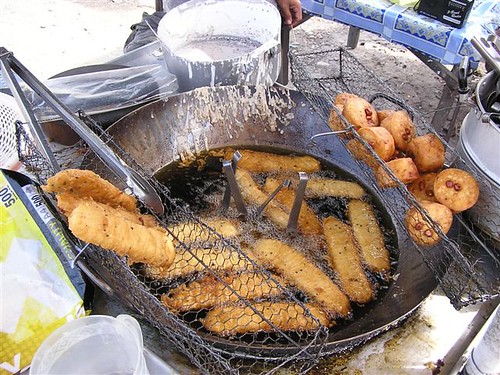
Deep-Fried Bananas


An April 3rd, I.R.S. Ruling makes about as much sense as deep frying a banana and thinking it is healthy. Notice 2007-37 would dramatically undercut the efforts of the biofuels industry and would just open the door for more Big Oil subsidies. In the 2005 Energy Policy Act, Congress passed a biodiesel tax incentive extension. Members in Congress, in cahoots with Big Oil, also passed a provision to provide incentives for Thermal De-Polymerization (TDP), a system of refining petroleum by using plastics, and food wastes (pig offal and carcasses). This provision was never debated by Congress.

Now, ConocoPhilips with help from their friends in the I.R.S. has an end around to receive the same $1.00 a gallon subsidy as real biofuel manufacturers. The I.R.S. ruled that because TDP uses animal byproducts in its production, it qualifies as a biofuel. This makes as much sense as lighting a match to see if you have a gas leak. The process is nothing more than dumping animal carcasses into the petroleum as it is being refined.

Biodiesel has undergone over 15 years of testing, to assure its quality, safety, and environmental impact. TDP oil has not undergone these same tests. It is not known what impact this type of oil would have on the engines running it, or what impact it would have on the environment. Likewise, this process wouldn’t add a single gallon of refining capacity. Furthermore, if TDP is proved to be not environmentally friendly, or if it has a negative impact on engines, all biofuels will be maligned. Also teaming with ConocoPhilips in this endeavor is Tyson Food Incorporated. This move gives Tyson Food Incorporated, a cheap and easy means of disposing of its hazardous waste. ConocoPhilips and Tyson Foods claim that the end product is “renewable diesel” has as much validity as claiming light cigarettes won’t give you cancer.

North Carolina needs to prevent a similar event from happening here. North Carolinians need to support Senate Bill 1272, a measure that would clearly define Biodiesel, according to the actual industry standards. We need to prevent another industry end-around, and further violations of commons sense.

Monday, May 7, 2007

North Carolina a Leader...In Studies

North Carolina’s plan for biofuels is nothing more than pie-in-the-sky thinking. The plan should be applauded for its vision, but it does too little and too late. It wants to make the state a leader in the Mid-Atlantic and Southern states, but 2017 is too late. Identified in the plan are nine strategies. This entry will focus on the main ideas.

Strategy 1: By 2017, 10% of liquid fuels will be biofuels grown in the state.

North Carolina can do more. This matter is too pressing to be postponed by 10 years. Through proper incentives, North Carolina can produce enough biofuels to accomplish this goal by 2012.

Strategy 2: Development of a State-Level biofuels commission.

This commission can easily be implemented within the North Carolina Department of Agriculture and Consumer Services, answering to the Agriculture Commissioner. This organization should take the lead in the permitting process for fuel-grade ethanol and biodiesel. Currently, the process for approval for fuel-grade ethanol must go through the North Carolina Alcoholic Beverage Control Board. Fuel-grade ethanol is not an alcoholic beverage; therefore, it should not be regulated by the same individuals who enforce the drinking laws.

Strategy 5: Craft a plan for coordinating the effort.

It appears that North Carolina is completely set up on planning and studying; instead of implementing. By the time North Carolina is finished studying every little aspect of the issue, its goal for becoming a leader in biofuels will be lost. There is also no need to create a comprehensive list of feedstock which can be used. The producers already have this information. Let science, the market, and producers determine the most efficient feedstock. This aspect of the plan would only create more hurdles for biofuel producers. Regulation is necessary, but not when it begins to micromanage every aspect of the industry.

Strategy 6: Increase use of current feed stock and research new feedstock and processes.

This is one of the best ideas from the report. Increase production using current technology and feedstock, while research focuses on developing newer, more efficient, and greener processes and feedstock. One failure of strategy six is the call to streamline the environmental permitting process. The major draw for biofuels is that they are a more environmentally friendly energy source. We do not need to open the door for potential environmental hazard.

Strategy 7: Endorse the Novozymes proposal to the US Department of Energy.

While good, North Carolina needs to focus more on the present, not possible technology, which may, or may not pan out further down the line. This is more evidence that this plan fails to see the trees for the forest.

Strategy 8: Create a coordinated state-wide effort.

We agree, North Carolina must do more than displace 20 of petroleum use and we believe it can. The state does not; need to implement a pilot marketing program for biofuels. Smoky Mountain Biofuels has already announced a plan for 23 service stations offering biodiesel. Let this market driven approach serve as the test area, identify its failures and successes and spread its accomplishments throughout the state. Likewise, there is no need for the state to development curriculum necessary for the workforce. We already have four producers in the state, one of which provides education to the public through the state’s community college system. State mandates would be redundant and would create more barriers.

Strategy 9: Incentives

Legislation already exists before committee which would accomplish this strategy; however, it cannot get a vote. Senator John Snow is attempting to lead the battle charge for biofuels, but for some reason has met road blocks along the way.

Senate bill 1273 would establish a reduced excise tax for biodiesel components of 13.5 cents. North Carolina Consumers for Biofuels supports this legislation. It serves as an important catalyst for consumers to make the switch.

Senate Bill 1277 requires diesel vehicles procured by the state to receive a manufactures warranty covering the use of biofuels.

Senate Bill 1278 would remove the excise tax on fuel-grade ethanol produced and used by the same individual. This fuel is not for sale and therefore should not be taxed as such.

Senate Bill 1451 would create an incentives fund for producers of biofuels. Focused on benefiting smaller-scale North Carolina based producers, this legislation would benefit the economy of North Carolina. Instead of money being directed out of the state to out-of-state producers, the money would be directly placed back into the economy.

Senate Bill 1452 would require all school buses purchased in North Carolina to be capable of running B-20. On average, each school bus in North Carolina requires 100 gallons of diesel a week to operate. With over 1000 school buses operating in the state, which would be well over 200,000 gallons reduction of petroleum derived fuel.

It is now time for implementation. We need to encourage our State leaders to discuss and vote for these bills. Stop the bottleneck and actually work to make North Carolina a leader in biofuels. Stop talking! Act!